

 Zyntra OS
 Zyntra Legal
 Zyntra Real Estate
 Zyntra Hotel
 Zyntra E-commerce
 Zyntra Appointments
 Zyntra Repair
 Zyntra Garage
 Zyntra Concierge
 Zyntra Contracting
 Zyntra Clinic
 Zyntra Call Center
 Zyntra OTA
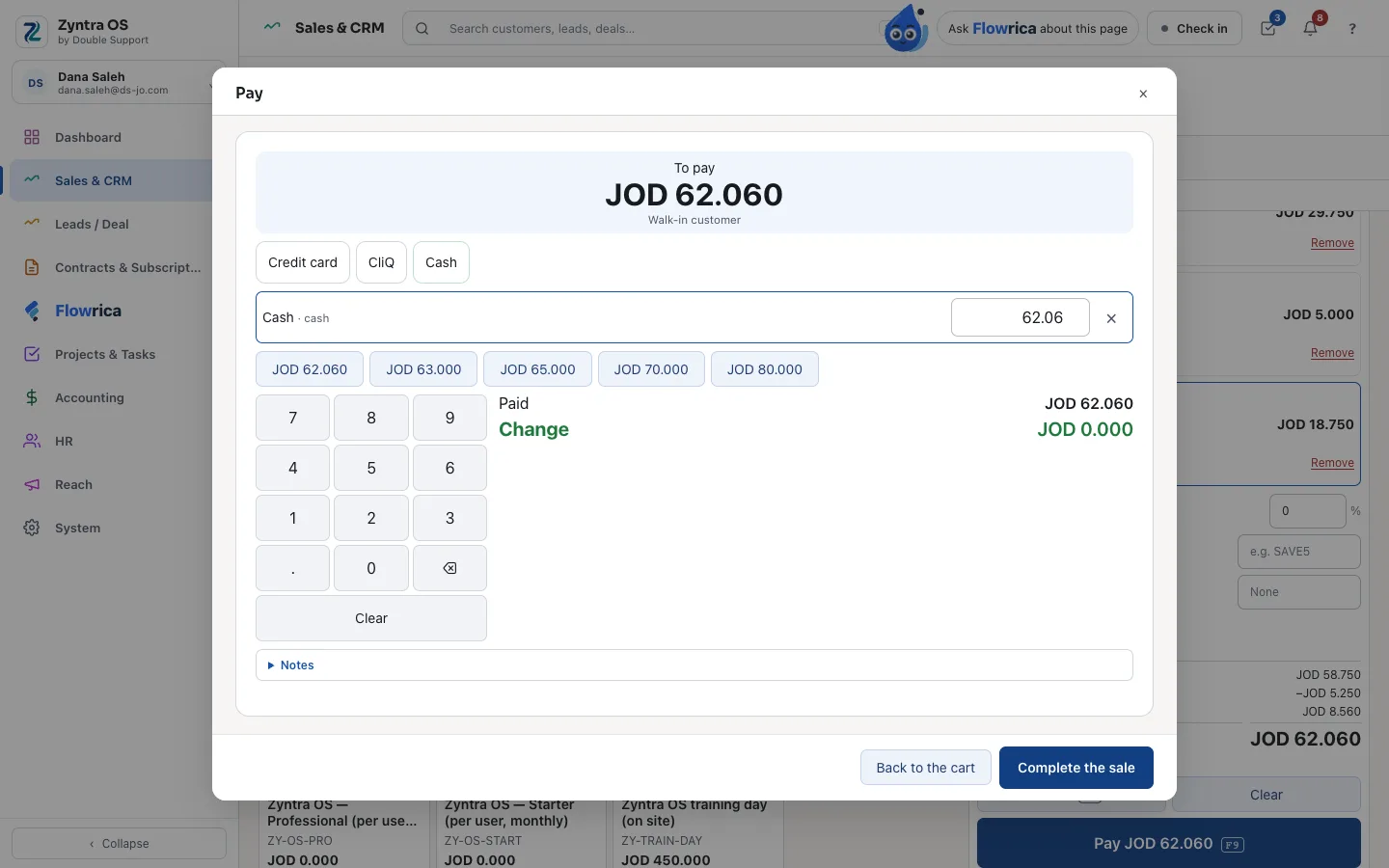
What happens at the till
- The cashier scans or picks the items; the system finds the price, the discount and the tax.
- The customer pays by cash, card or another way, or in more than one way at once.
- A receipt is printed or sent.
- The stock goes down, and the sale reaches the accounts.
Shifts and the cash drawer
Each shift opens with a float of cash. Money taken in or out is written with its reason. At the close the cash is counted and compared with what the system expected, and any difference is explained. This is how a shop knows its cash is right, every day.
Returns, promotions and reports
- Returns: the goods go back into stock and the money back the way it was paid, against the original sale.
- Promotions and vouchers: discounts that apply by themselves, or a code the cashier types.
- Reports: sales by day, till, cashier, item and payment type.
Why the till should not stand alone
A till that is a separate program means the day's sales are copied into the accounts later, the stock is out of step, and the e-invoice is a second job. When the till is part of the business system, each sale is already an invoice, a stock movement and a payment.
What to look for
- It keeps working fast on a scanner, a touch screen or a keyboard.
- A sale sent twice on a slow network is written once.
- Each cashier has limits on discounts and returns.
- Sales reach e-invoicing where your country asks for it.