

 Zyntra OS
 Zyntra Legal
 Zyntra Real Estate
 Zyntra Hotel
 Zyntra E-commerce
 Zyntra Appointments
 Zyntra Repair
 Zyntra Garage
 Zyntra Concierge
 Zyntra Contracting
 Zyntra Clinic
 Zyntra Call Center
 Zyntra OTA
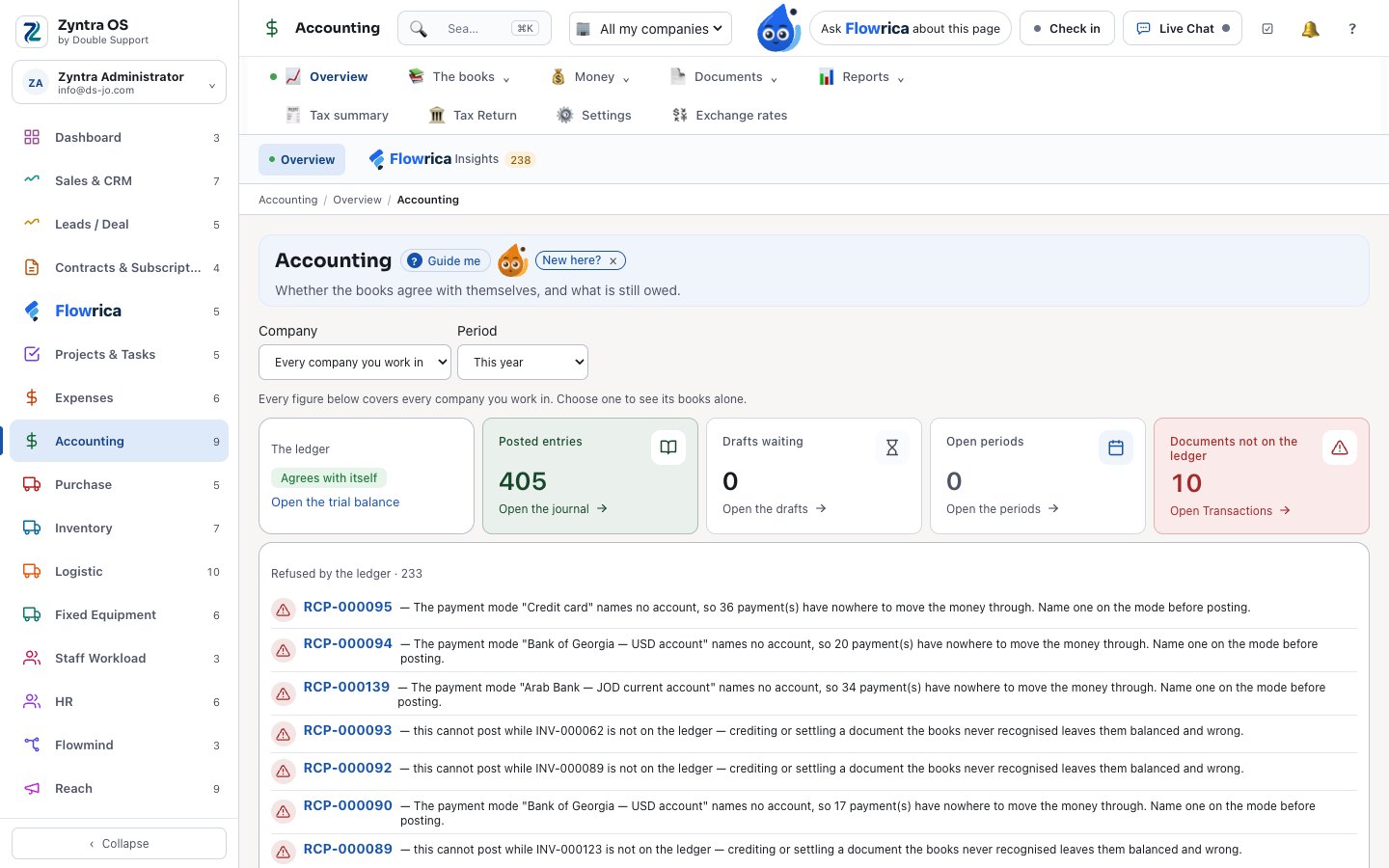
1. The books, the way your accountants keep them
Can your accountants use their own chart of accounts, in Arabic, with the levels they are used to? Are there journal entries, fiscal periods that close and reopen with a reason, and years that can be marked as audited?
2. Where the entries come from
Do invoices, payments, purchase bills, expenses, stock and payroll post to the books as they happen? Every entry typed by hand from another system is a chance for a mistake and a day of reconciliation.
3. Cheques and banks
Where cheques are common, follow each one through its whole life: received, deposited, cleared or returned. Check that bank statements can be imported and matched, with rules for lines that repeat.
4. Currencies
If you buy or sell in more than one currency, each document should be converted at the rate of its own date, and a rate that is too old should be refused.
5. Tax and e-invoicing
Does it produce your tax returns, and does it send invoices to your country's e-invoicing system — such as JoFotara in Jordan or ZATCA in Saudi Arabia — by itself, with a log of what was sent?
6. Reports and budgets
Trial balance, income statement, balance sheet and cash flow at any date, budgets against actuals, and reports that say how many entries they counted.
7. People, rights and language
Can you decide who sees money and who does not? Does every screen and every printed document work in Arabic? Can it hold several companies?
8. Moving in
How do your opening balances and your current customers and vendors get into it, and can you try it on your own data before you switch?