

 Zyntra OS
 Zyntra Legal
 Zyntra Real Estate
 Zyntra Hotel
 Zyntra E-commerce
 Zyntra Appointments
 Zyntra Repair
 Zyntra Garage
 Zyntra Concierge
 Zyntra Contracting
 Zyntra Clinic
 Zyntra Call Center
 Zyntra OTA
What it keeps
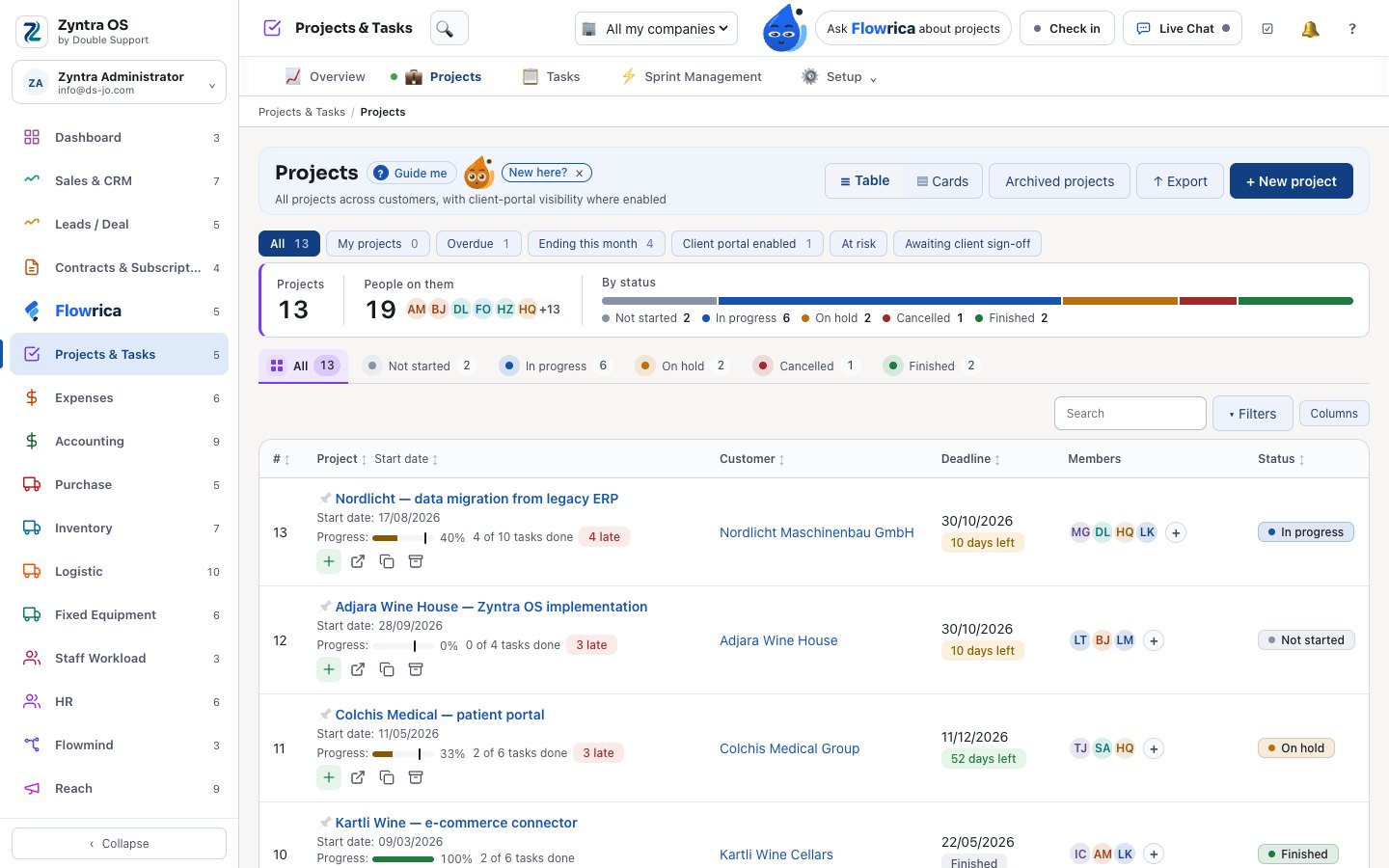
- Tasks: who does what, by when, and in which state.
- The plan: milestones and the order tasks must follow.
- Time: the hours each person logs against each task.
- Money: the budget, the cost and what can be billed.
Two ways to plan
A classic plan lays the work out in advance, often on a Gantt chart: bars on a timeline, with dependencies between them, so moving one task shows what moves with it. An agile plan works in short sprints of one or two weeks: the team commits to a set of tasks, finishes them and plans the next. Many teams use both, depending on the project.
Workload: who has room
A project can be on time on paper while one person carries three projects at once. Good software shows each person's week against their capacity, so work is shared before deadlines slip.
From time to invoice
For a business that sells its time, the hours logged on tasks are what it bills. When time tracking and invoicing are in one system, each hour is billed once, and the manager is warned before a project runs over its estimate.
What to look for
- Tasks, time and invoices in one place.
- A view for the customer, so they follow the work without long emails.
- One rule for overload across tasks and sprints.
- Rights: each person sees the projects they work on.