

 Zyntra OS
 Zyntra Legal
 Zyntra Real Estate
 Zyntra Hotel
 Zyntra E-commerce
 Zyntra Appointments
 Zyntra Repair
 Zyntra Garage
 Zyntra Concierge
 Zyntra Contracting
 Zyntra Clinic
 Zyntra Call Center
 Zyntra OTA
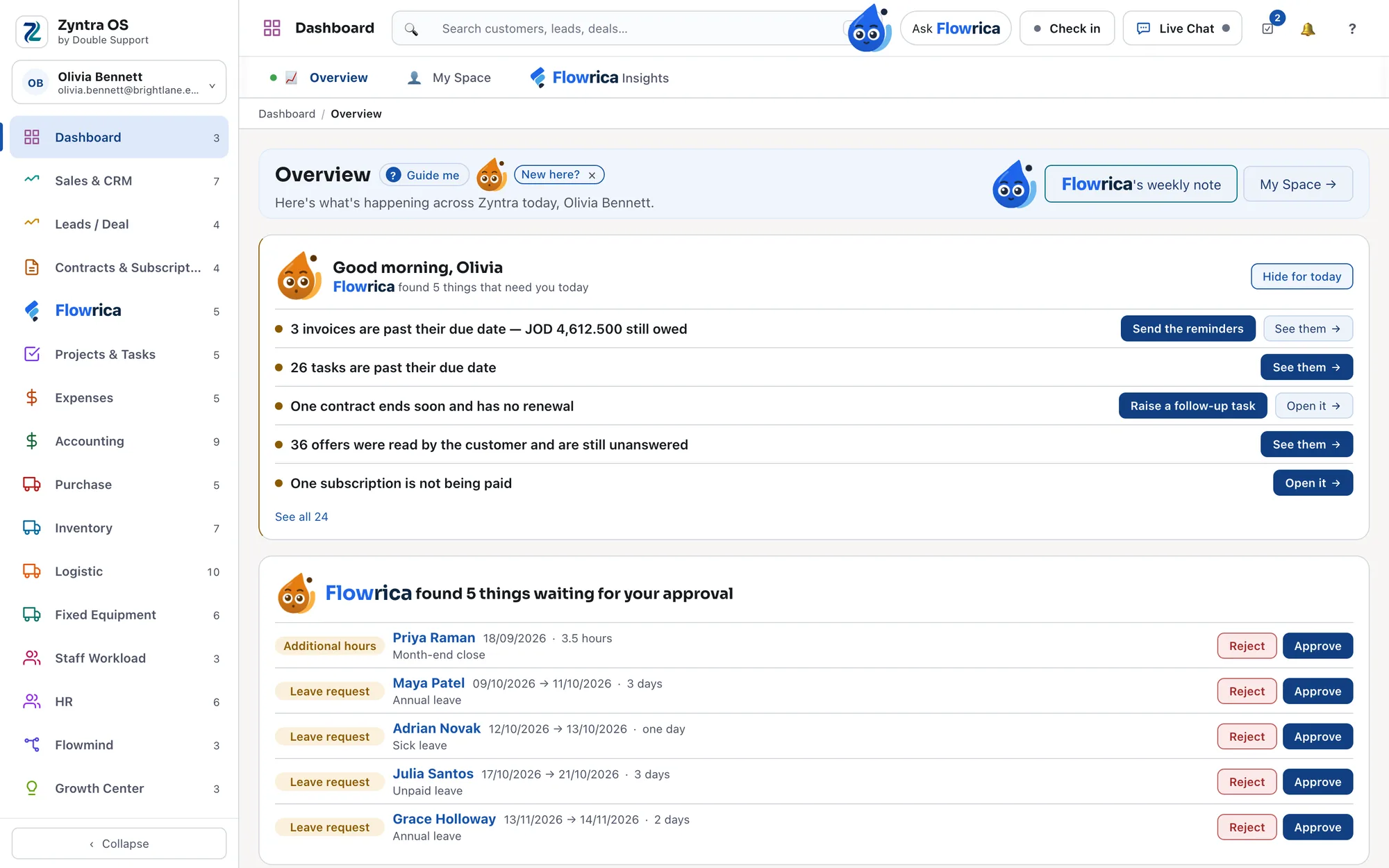
What ERP means
ERP stands for enterprise resource planning. The name is old and formal; the idea is simple. Instead of one program for invoices, a spreadsheet for stock, another tool for customers and a folder for payroll, the business works in one system where each record exists once: the customer you sell to is the same customer your accountant collects from.
What an ERP system usually covers
- Sales and customers: leads, quotations, orders, invoices and payments.
- Accounting: the chart of accounts, journal entries, banks, cheques, tax and financial reports.
- Purchasing and inventory: purchase orders, vendor bills, warehouses and stock movements.
- HR and payroll: employee records, attendance, leave and salaries.
- Projects: tasks, time and what a project costs and earns.
Not every business needs every part on the first day. A good ERP system lets you switch on what you need and add the rest later.
Signs a business needs one
- The same customer, item or invoice is typed into more than one place.
- Month-end closing waits for files from several people.
- Nobody can say what is in stock, who owes what, or which project makes money, without asking around.
- Rights are hard to control: everyone sees everything, or nobody sees enough.
What to check before choosing
- Does it work fully in Arabic and English, right to left, on every screen and every printed document?
- Does it do e-invoicing for your country?
- Can you control who sees what, per screen and per record?
- Can it hold more than one company if you have them?
- Who will set it up, move your data in and answer you afterwards?
- What does the price include, and what is charged as an extra?